
, for everyone. More @ http://goo.gl/7AJzbL -->
<svg width="44" height="44" viewBox="0 0 44 44" xmlns="http://www.w3.org/2000/svg" stroke="%23F2EEEE">
<g fill="none" fill-rule="evenodd" stroke-width="2">
<circle cx="22" cy="22" r="1">
<animate attributeName="r"
begin="0s" dur="1.8s"
values="1; 20"
calcMode="spline"
keyTimes="0; 1"
keySplines="0.165, 0.84, 0.44, 1"
repeatCount="indefinite" />
<animate attributeName="stroke-opacity"
begin="0s" dur="1.8s"
values="1; 0"
calcMode="spline"
keyTimes="0; 1"
keySplines="0.3, 0.61, 0.355, 1"
repeatCount="indefinite" />
</circle>
<circle cx="22" cy="22" r="1">
<animate attributeName="r"
begin="-0.9s" dur="1.8s"
values="1; 20"
calcMode="spline"
keyTimes="0; 1"
keySplines="0.165, 0.84, 0.44, 1"
repeatCount="indefinite" />
<animate attributeName="stroke-opacity"
begin="-0.9s" dur="1.8s"
values="1; 0"
calcMode="spline"
keyTimes="0; 1"
keySplines="0.3, 0.61, 0.355, 1"
repeatCount="indefinite" />
</circle>
</g>
</svg>)


The conversation around fitness in Nigeria is gradually shifting from appearance driven goals to a deeper understanding of long term health, performance, and overall well being. That message took center stage at the Nigerian Fitness Expo 2026, where fitness professionals, coaches, and enthusiasts gathered to explore the latest ideas shaping the industry.
One of the standout sessions during the event was a master class on strength training and conditioning delivered by Charles Iyere, Founder of Charlie’s Gym Dance Studio in Ekpoma, Edo State, Nigeria. Rather than focusing solely on building muscle or lifting heavier weights, Iyere encouraged participants to view strength as something that extends far beyond the walls of a gym.
Drawing from his own journey and years of coaching experience, he shared practical lessons on training with purpose, understanding how the body adapts, and developing habits that produce lasting results.
Iyere began his presentation with a story that immediately connected with his audience. More than a decade ago, he recalled, he could not bench press his own body weight and was widely recognized only as a dance fitness instructor.
Today, he coaches clients across different countries and has helped many develop the strength to achieve goals they once considered impossible.
For Iyere, the transformation was never about the amount of weight on the bar.
“The weight on the bar didn’t change me. The decision to pick it up did,” he told attendees.
That statement became the foundation of his master class. Strength, he explained, begins with a decision. Every workout, every healthy meal, every early morning training session represents a choice that gradually shapes both the body and the mind.
He reminded participants that simply showing up at the expo already demonstrated a willingness to improve, describing that commitment as the first step toward becoming stronger.
A central message throughout the session was that many people spend countless hours in the gym without achieving the progress they expect.
According to Iyere, the issue is often not a lack of effort but a lack of understanding.
He explained that effective strength training requires structure, purpose, and consistency. Rather than chasing random exercises seen on social media, individuals should understand why they are performing each movement and how different training methods influence the body’s development.
He encouraged participants to focus on education as much as exercise, noting that knowledge allows people to train more efficiently while reducing the likelihood of injury and frustration.
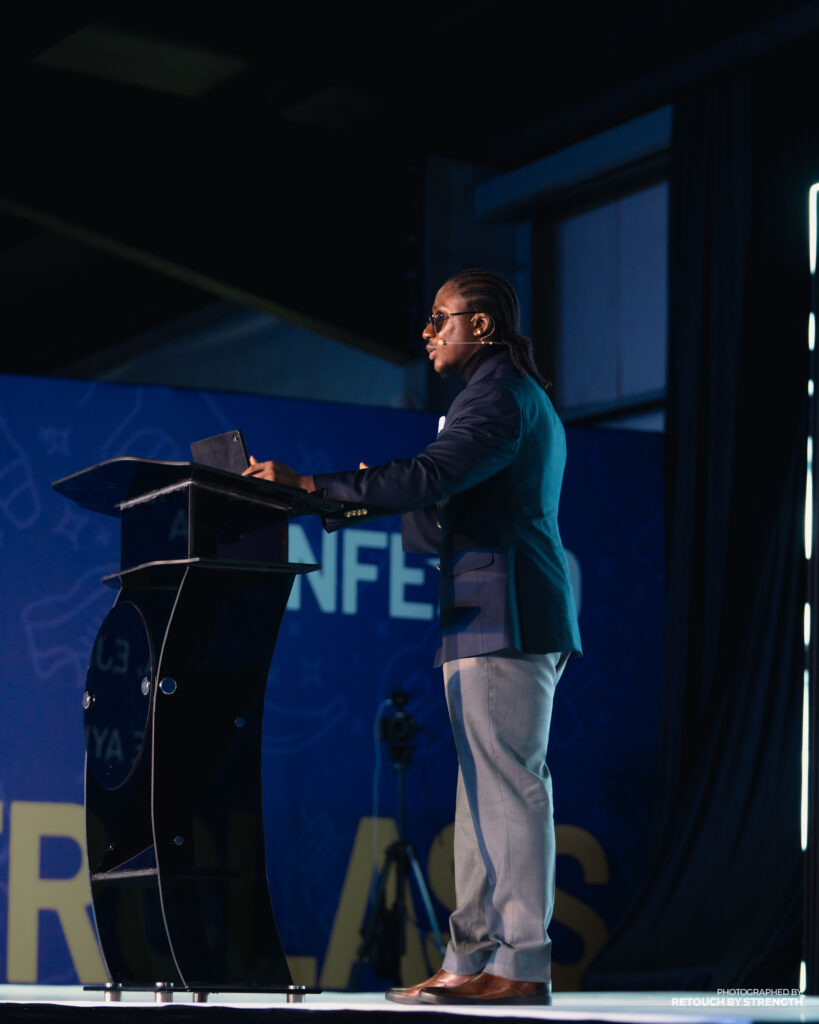
One of the key educational moments of the master class focused on distinguishing muscular strength from muscular endurance.
Iyere explained that muscular strength refers to the maximum amount of force a person can produce during a single effort, while muscular endurance is the ability to perform repeated movements or sustain effort over time.
Although many people use the terms interchangeably, he emphasized that they serve different purposes and require different training methods.
His message was straightforward. Strength determines how much force the body can produce, while endurance determines how long that force can be maintained. Both qualities are important, but neither should be ignored in pursuit of the other.
He described strength as the engine and endurance as the fuel tank, illustrating how each contributes to overall physical performance.
Another major focus of the session was conditioning, a concept that Iyere believes is frequently misunderstood.
He challenged the idea that conditioning is simply about exhausting workouts or punishment at the end of a training session.
Instead, he described conditioning as the body’s ability to perform, recover, and sustain effort over time.
Whether someone is an athlete, a business professional, or a parent balancing a busy schedule, conditioning influences how well the body responds to physical demands throughout daily life.
By combining strength with proper conditioning, individuals become better prepared not only for athletic performance but also for everyday responsibilities that require endurance, resilience, and recovery.
Addressing one of the most common questions in fitness, Iyere spoke about the role genetics play in muscle development.
He acknowledged that factors such as muscle fiber composition, body structure, and hormonal differences are inherited and cannot be changed.
However, he encouraged participants not to view genetics as a limitation.
Instead, he highlighted the many factors that remain within an individual’s control, including training quality, consistency, nutrition, recovery, hydration, and stress management.
Summarizing this principle, he shared one of the session’s most memorable statements.
“Genetics loads the gun. Lifestyle and training pull the trigger.”
The remark reinforced the idea that while everyone begins from different starting points, consistent habits ultimately determine how much of that potential is realized.
Throughout the master class, Iyere repeatedly stressed the importance of balanced training.
Many people, he noted, spend excessive time training muscles they can easily see while neglecting equally important areas of the body.
This imbalance can eventually lead to poor posture, recurring injuries, slower progress, and reduced athletic performance.
Instead of thinking about isolated muscles, he encouraged participants to train fundamental movement patterns that include pushing, pulling, squatting, hinging, lunging, carrying, and rotating.
A balanced body, he explained, is not only stronger but also more resilient and capable of performing well in everyday life.

Another important lesson centered on designing training programs that people can realistically maintain.
Iyere introduced principles that help individuals organize their workouts, including training frequency, intensity, session duration, exercise selection, and long term adherence.
He emphasized that consistency always outperforms short periods of extreme effort.
Rather than searching for the perfect workout, participants were encouraged to adopt routines that fit their schedules and lifestyles, making it easier to remain committed over months and years instead of only a few weeks.
He also discussed the importance of gradual progression, allowing the body to adapt safely while reducing the likelihood of injury or burnout.
Using exercises such as the bench press and barbell squat, Iyere highlighted several mistakes commonly seen in gyms.
Poor technique, lifting weights that exceed current ability, skipping warm ups, and neglecting proper recovery were among the issues he identified as barriers to long term progress.
He advised participants to prioritize movement quality over ego, reminding them that lifting heavier weights with poor form often produces worse results than using lighter loads correctly.
For beginners especially, mastering the fundamentals remains far more valuable than attempting advanced movements too soon.
He also encouraged attendees to seek guidance from qualified fitness professionals whenever uncertainty arises.
Beyond exercise itself, Iyere emphasized that meaningful progress depends on nutrition and recovery.
Protein supports muscle repair and growth, carbohydrates provide the energy required for demanding workouts, healthy fats contribute to hormone production, and hydration influences both performance and recovery.
Sleep also received significant attention during the presentation.
Without sufficient recovery, he explained, even the best training program will struggle to deliver consistent improvements because the body adapts during periods of rest rather than during exercise itself.
The message reinforced that fitness is built through a combination of smart training and healthy daily habits rather than isolated workouts.
As the session drew to a close, Iyere returned to the theme that had shaped his presentation from the beginning.
Strength, he said, is not measured only by numbers on a barbell. It is reflected in the decisions people make every day when no one else is watching.
Whether choosing to complete one more repetition, preparing a nutritious meal, or waking up early for training despite fatigue, those seemingly ordinary choices accumulate into meaningful transformation over time.
He challenged participants to leave the expo with one commitment rather than dozens of new ideas.
Instead of attempting to change everything at once, he encouraged each person to select one principle from the session and apply it consistently over the next thirty days.
“Strength isn’t built in masterclasses,” he said. “It’s built in the decisions you make when the room is empty.”
Before concluding, Iyere expressed appreciation to the organizers of the Nigerian Fitness Expo and Awards for creating a platform dedicated to raising professional standards within Nigeria’s fitness industry.
He commended their efforts to build a community where education, collaboration, and excellence continue to shape the future of health and wellness across the country.
His final message was both simple and memorable.
“The barbell is honest. It gives you exactly what you put in. So does life.”
For those who attended the master class, the takeaway extended well beyond exercise techniques or workout programming. It was a reminder that lasting strength is developed through consistency, discipline, and the willingness to keep showing up. While physical transformation may begin in the gym, the habits that sustain it are built in everyday life, one decision at a time.